
Loading...
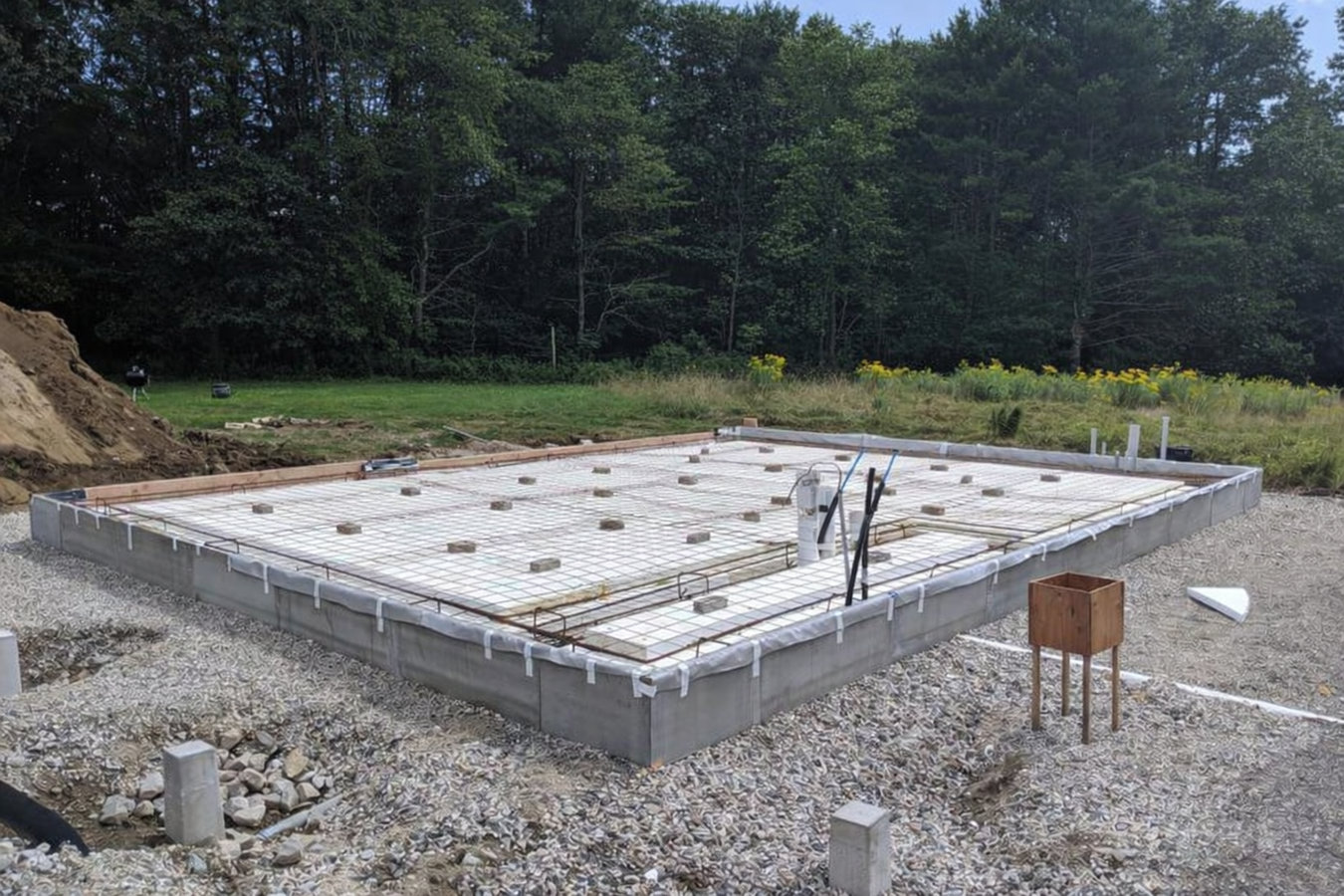
A slab poured without the right base and reinforcement will crack and settle on Bloomington's clay soil. We build slab foundations engineered for central Illinois conditions, permitted through the City, and backed by a written estimate before any work begins.
Slab foundation building in Bloomington means excavating and grading the site, laying a compacted gravel base, setting forms and steel reinforcement, pouring the concrete, and finishing the surface - active on-site work for a typical residential slab takes one to three days, followed by roughly 28 days of curing before the slab is ready to carry heavy construction loads. Getting the base preparation right before the pour is the single most important factor in how the slab performs over the life of your home.
Bloomington has a mix of newer subdivisions on the north and west sides where slab foundations are the standard approach, and older neighborhoods closer to downtown where foundations from previous decades sometimes need to be evaluated or replaced. If your new home, addition, or outbuilding calls for a slab, the work needs to account for McLean County clay soils that shift seasonally and a frost depth that requires careful edge design. Projects that also involve foundation installation for wall systems can often be assessed and estimated in the same site visit.
If you are starting a new construction project - whether a home, garage, workshop, or room addition - you need a foundation before anything else can be built. A slab is often the right choice for single-story structures and is the most common foundation type in Bloomington's newer residential developments. If your builder or architect has recommended a slab, this is the service that makes it happen.
Hairline cracks in concrete are normal and usually harmless. But if you notice cracks wider than about a quarter of an inch, cracks that run diagonally across a large section of floor, or areas where one side of a crack is higher than the other, those are signs the slab may be failing. In Bloomington, this kind of damage is often linked to clay soil shifting after a wet spring or a dry summer.
If doors have started sticking, swinging open on their own, or no longer latch properly, the floor beneath them may have shifted. Similarly, if a marble placed on your floor rolls noticeably in one direction, the slab may have settled unevenly. These are signs worth having a contractor assess before the problem worsens.
If you notice moisture seeping up through a concrete floor, damp spots that appear after rain, or standing water near the foundation edge, the drainage beneath the slab may be failing. Bloomington's clay soils hold water rather than letting it drain away, making this a more common problem here than in areas with sandier ground. Persistent moisture under a slab can erode the base material and cause settling.
We build slab foundations for new homes, room additions, detached garages, workshops, and outbuildings throughout Bloomington and central Illinois. Every project begins with a site visit to assess the soil conditions and grade before we ever commit to a quote. The gravel base goes in before every pour - it is not optional here, given how Bloomington's clay soil behaves through wet springs and dry summers. Steel reinforcement is embedded in every slab: rebar or welded wire mesh inside the concrete resists the cracking and separation that can occur if the ground shifts beneath the slab. We also cut control joints into the surface after the pour to give the concrete a planned place to accommodate natural shrinkage, rather than letting it crack unpredictably across the floor. Projects where the slab connects to a wall system or requires structural concrete footings at the perimeter are handled as part of the same project scope.
The City of Bloomington requires a building permit for new foundation work and schedules a pre-pour inspection to verify the site preparation. We handle the permit application, coordinate the inspection, and give you the permit number before work begins so you have documentation of the project. A broom finish is standard for most slabs - practical, slightly textured, and suited for the range of uses a residential slab serves. Smooth trowel finishes are available for garage floors and interior spaces where a polished surface is preferred.
Suits new single-story homes, additions, and garages where a slab serves as both the floor and the foundation base.
For detached garages, workshops, and outbuildings that need a permanent concrete base to replace an older gravel or pier foundation.
For homeowners expanding their living space with a ground-floor addition that needs a properly reinforced concrete foundation.
For existing slabs that have cracked, settled unevenly, or developed moisture problems from inadequate base preparation.
Bloomington sits in McLean County, where the soil is classified as heavy glacial clay - the kind that expands when it gets wet and shrinks when it dries out. That movement is small in any single cycle, but over years it adds up and causes slabs poured without adequate base preparation to crack, tilt, or develop moisture problems. Bloomington also sees frost penetration of roughly 36 inches in a typical winter, which means the edges of a slab need to be designed to resist the heaving pressure that comes with repeated freeze-thaw cycles. The American Concrete Institute publishes standards for slab-on-grade construction that reflect exactly these kinds of climate and soil considerations.
The City of Bloomington's permit and inspection process adds a formal check on the work that benefits homeowners. An inspector confirms the gravel base depth, reinforcement placement, and form layout before the pour - which means the foundation is verified before it is permanent. Bloomington's spring rainfall and flat terrain also mean that drainage around the slab has to be planned carefully from the start. We serve homeowners building slabs in Lincoln, IL and Normal, IL where the same clay soil conditions and seasonal considerations apply to every foundation project.
Reach out by phone or through the contact form. We schedule a free site visit to assess the soil, grade, and access, then provide a written estimate that covers excavation, base prep, reinforcement, the pour, finishing, permit costs, and cleanup. We respond within 1 business day.
Once you approve the estimate, we apply for the City of Bloomington building permit. Permit approval typically takes a few business days to a week. We give you the permit number before work begins so you can confirm it is active and on record.
The crew excavates, grades, lays the gravel base, sets forms, and places reinforcement. A city inspector checks the site before the pour - we coordinate that visit. On pour day, the concrete truck arrives and the crew fills, levels, and finishes the slab in a single session.
Light foot traffic is possible within 24 to 48 hours, but full strength takes about 28 days. We cover the fresh slab to control curing and walk you through what to avoid during that period. Forms come down, the site is cleaned up, and the area around the slab is left ready for the next phase of your project.
We respond within 1 business day - no obligation, no pressure. After you reach out, we schedule a free site visit to assess your soil conditions, measure the area, and give you a written estimate that covers every line item before any work begins.
(309) 239-1877We build slab foundations across 12 communities in central Illinois, which means our crews have direct experience with the clay soils, frost depths, and permit processes that vary across McLean County and the surrounding region - not just general concrete knowledge applied anywhere.
A compacted gravel base and embedded steel reinforcement are not optional extras on our slab projects - they are standard on every pour. These two steps are what determine whether a slab stays level through decades of Bloomington's seasonal soil movement or starts cracking within a few years.
We pull the City of Bloomington building permit, coordinate the pre-pour inspection, and provide you with the permit number before work begins. That permit creates an official record of the work - which matters when you sell your home and during any future construction that references the existing foundation.
Every estimate breaks down the cost of excavation, gravel base, reinforcement, the pour, finishing, permit fees, and cleanup - line by line. You know exactly what you are agreeing to before anyone arrives on your property, and the final bill matches the estimate.
Taken together, those practices add up to a slab that holds its shape and stays dry through Bloomington's wet springs and hard winters - which is what every homeowner building or replacing a foundation in this area needs to know they are getting. The same standard should apply when choosing any concrete pad contractor - ask for the permit number before work starts.
Need a full foundation rather than a slab-on-grade? We install basement and wall foundations sized and engineered for Bloomington's frost depth and clay soil conditions.
Learn moreFootings are the base your slab or foundation wall sits on. We pour concrete footings to the correct depth for McLean County's frost line requirements on every project.
Learn moreBloomington contractors book out fast once the ground thaws - reach out now to lock in your spring or summer start date before the best windows are gone.