
Loading...
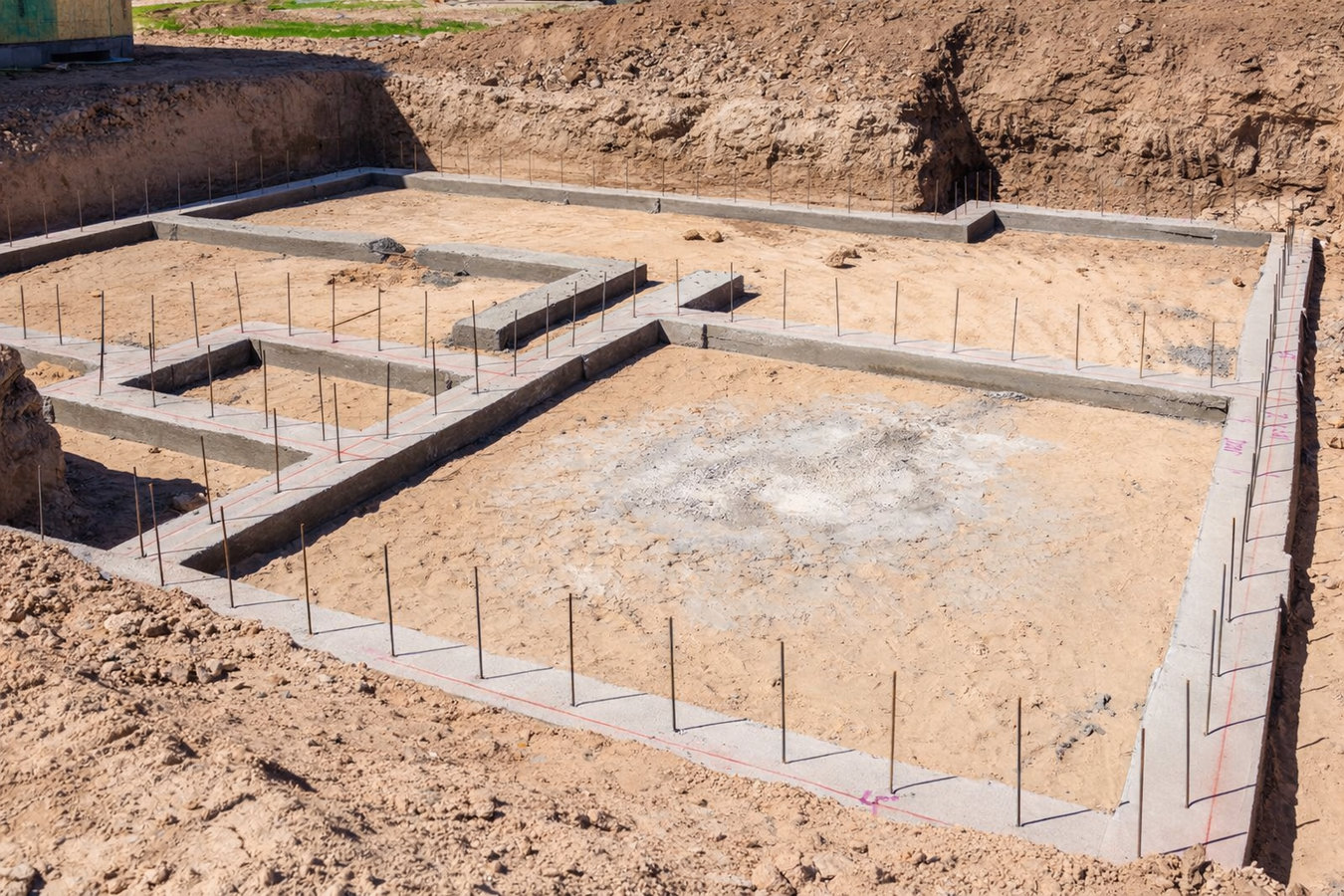
A foundation poured without accounting for Bloomington's clay soil and 42-inch frost depth will crack, shift, and let water in. We install basement and wall foundations engineered for central Illinois conditions, with City permits handled and written estimates up front.
Foundation installation in Bloomington means excavating to the required depth, pouring concrete footings below the frost line, building or forming the foundation walls, waterproofing the exterior, backfilling with properly compacted soil, and grading the ground to direct water away from the house - a new foundation for an average home typically takes one to three weeks of active work, followed by inspection and closeout with the City. The curing period after the pour, which takes about 28 days for the concrete to reach full strength, determines when framing and construction on top of the foundation can begin.
Bloomington has a significant portion of housing stock built between the 1940s and 1970s, when construction standards were different and foundations were often built without modern waterproofing or reinforcement. If your home is in one of these older neighborhoods and the original foundation is showing signs of failure, replacement is often more durable and cost-effective than patching. Projects that involve commercial flatwork or access drives alongside residential foundation work - such as concrete parking lot building for multi-unit properties - can often be coordinated as part of the same project scope and timeline.
If you see cracks that angle out from the corners of your windows or doors - especially on the exterior of your home - that is often a sign the foundation is shifting or settling unevenly. In Bloomington, this kind of movement is frequently caused by clay soil expanding and contracting through wet springs and dry summers. A crack you can fit a quarter into is wide enough to warrant a professional evaluation.
When a foundation moves, it pulls the frame of the house with it - and the first place you usually notice that is in doors and windows that suddenly do not open or close the way they used to. This is especially common in Bloomington homes after a very wet spring followed by a dry summer, when the soil swells and then shrinks dramatically. If multiple doors or windows in the same area of your home start sticking at the same time, that pattern is worth investigating.
Finding water on your basement floor after a heavy rain or during spring snowmelt is one of the clearest signs that your foundation is no longer keeping moisture out. Bloomington's spring rainy season and the flat terrain in many neighborhoods mean water has nowhere to drain quickly, putting pressure on older foundations. Even small amounts of recurring water can lead to mold and structural damage if the underlying problem is not addressed.
Stand in your basement and look at the walls from one end of the room. If a wall appears to curve inward or lean rather than standing perfectly straight, the soil pressure outside is winning the battle against your foundation. This is a more serious sign that requires prompt attention - walls that bow more than an inch are at risk of failing, and the repair options become more limited and more expensive the longer you wait.
We install full basement foundations, crawl space foundations, and wall systems for new homes, additions, and replacement projects throughout Bloomington and central Illinois. Every project begins with excavation to the depth required by the City of Bloomington - footings must sit below the 42-inch frost line in McLean County, which prevents the freezing soil from pushing the foundation upward during winter. The footings are poured first and inspected by the city before any wall work begins. Foundation walls are formed and poured with steel reinforcement embedded inside, which resists cracking from soil pressure and seasonal ground movement. Before any backfill happens, we apply a waterproof membrane to the exterior wall surface and install perimeter drain tile at the base - these two steps are what keep basements dry through Bloomington's wet springs and snowmelt season. Projects where a slab-on-grade might be more appropriate for part of the structure - such as garages or single-story workshops - can be handled alongside wall foundations through our slab foundation building service.
After the concrete has cured and the city inspection is complete, the excavated soil is backfilled around the outside of the foundation walls and compacted in layers to prevent future settling. Final grading directs water away from the foundation - a critical step given how poorly Bloomington's clay soil drains. The City of Bloomington requires a building permit for new foundation work, and we pull the permit, coordinate the inspections at each required stage, and provide you with the permit number so the project is on official record. Crawl space foundations are built to the same standards as basements but require less excavation, making them a practical and less expensive option for homeowners who do not need full basement height.
Suits new home construction or replacement of existing basement foundations in Bloomington's older neighborhoods where excavation and wall height are planned from the start.
For homeowners who need a foundation with access below the home but do not require a full basement - a practical middle option that costs less than basement excavation.
For older Bloomington homes where the original foundation has failed, cracked beyond repair, or no longer meets current building standards.
Part of every foundation installation we do - membrane waterproofing on exterior walls and perimeter drain tile to keep basements dry through central Illinois spring rains.
Bloomington sits in McLean County, where the glacial clay soils left behind thousands of years ago create challenges for foundation work that do not exist in sandier regions. Clay expands when it gets wet and shrinks when it dries out - and Bloomington sees both extremes, with heavy spring rains followed by dry summer heat. That seasonal movement puts lateral pressure on foundation walls, which is why proper waterproofing, drainage, and soil compaction during backfill are not optional here. Illinois building codes require footings to sit below the 42-inch frost line in this area, and inspectors check this requirement before any concrete is poured. The Illinois State Geological Survey documents the clay-heavy soil composition across McLean County and the engineering considerations it creates for construction.
A significant portion of Bloomington's housing was built in the mid-20th century, and many of those homes are now reaching the age where foundation repair or replacement becomes necessary. Older neighborhoods near downtown and around Illinois State University often have foundations that were built before modern waterproofing and drainage standards existed. If you are replacing an older foundation, expect the contractor to uncover surprises once excavation begins - outdated or failing drainage tile, footings that do not meet current depth requirements, or wall materials that have deteriorated over decades. We serve homeowners throughout central Illinois, including Decatur, IL and Springfield, IL where the same clay soil conditions and frost depth requirements apply to every foundation project.
Reach out by phone or through the contact form. We schedule a free site visit to assess the soil, existing conditions if applicable, and access. Then we provide a written estimate that breaks down excavation, materials, labor, drainage work, permit fees, and cleanup. We respond within 1 business day.
Once you approve the estimate and sign the contract, we apply for a City of Bloomington building permit. Permit approval typically takes a few business days to a couple of weeks depending on the city's workload. We give you the permit number so you can confirm it is active and on record before any excavation begins.
The crew arrives with an excavator to dig out the foundation area. Footings are poured first and a city inspector checks them before any wall work starts. Once the inspection passes, the foundation walls are formed, reinforcement is placed, and the concrete is poured. This phase typically takes a few days to a week for an average home.
After the walls have cured, we apply waterproofing to the exterior and install drain tile at the base. Then the excavated soil is backfilled in compacted layers and the ground is graded to direct water away from the foundation. A final city inspection confirms everything meets code, and we close out the permit.
We respond within 1 business day - no obligation, no pressure. After you reach out, we schedule a free site visit to assess your property, measure the scope, and give you a written estimate that covers every line item before any work begins.
(309) 239-1877We install foundations across 12 communities in central Illinois, which means our crews know the McLean County frost depth requirements, clay soil conditions, and City of Bloomington permit processes that shape every foundation project in this region - not just general concrete knowledge applied anywhere.
Illinois building codes require footings to sit below the frost line - roughly 42 inches deep in McLean County - to prevent frost heave during winter. Every foundation we pour meets this requirement, and city inspectors check the depth before any concrete goes in. Cutting corners on footing depth causes problems that are extremely expensive to fix later.
We apply a waterproof membrane to the exterior of every foundation wall and install perimeter drain tile at the base before backfilling. These two steps are what keep basements dry through Bloomington's wet springs and snowmelt season - and they are standard on our projects, not optional add-ons.
Every estimate breaks down the cost of excavation, footing and wall materials, reinforcement, waterproofing, drainage, backfill, grading, permit fees, and cleanup. You know exactly what you are agreeing to before anyone arrives on your property, and the final bill will match that written estimate.
Each of those practices comes back to a foundation that holds up through Bloomington winters, stays dry through wet seasons, and protects your home's value for decades - which is exactly what homeowners in this area need and what many older foundations in Bloomington neighborhoods were never built to deliver.
Commercial and multi-unit properties that need foundation work often also need parking or drive access. We handle both foundation and flatwork projects as part of the same scope.
Learn moreSingle-story additions, garages, and workshops may call for a slab-on-grade rather than a full wall foundation. We pour and finish slab foundations suited to Bloomington soil conditions.
Learn moreBloomington contractors book out fast once the weather turns - reach out now to lock in your project before the best spring and summer windows are gone.