
Loading...
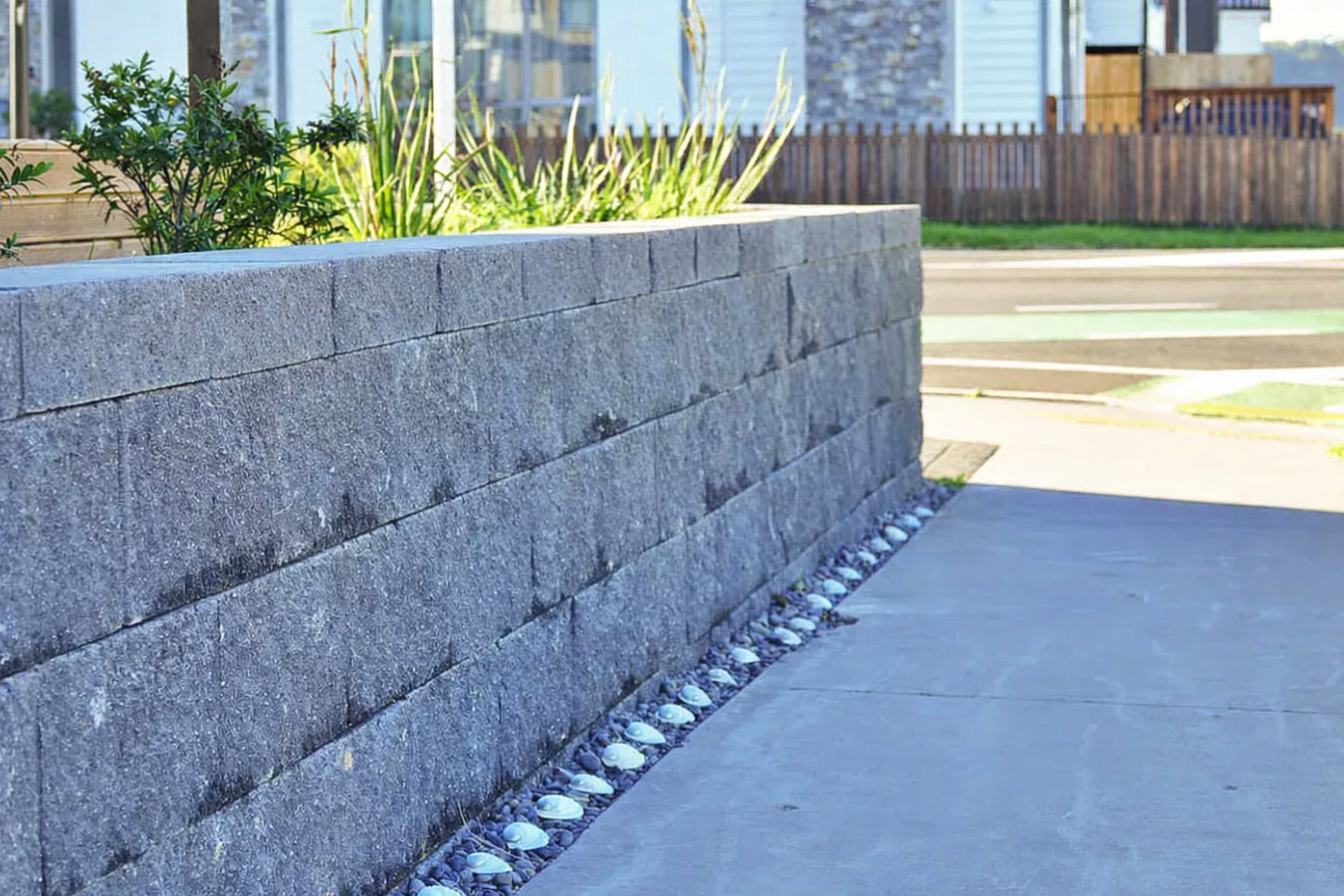
Sloped yards, crumbling timber walls, and washing soil are fixable problems. We build concrete retaining walls in Bloomington that hold through clay soils and hard Illinois winters.
Concrete retaining walls in Bloomington hold back soil on slopes and hillsides so it stays put through rain, snowmelt, and seasonal soil movement - most residential projects take one to three days of active construction with additional curing time before backfill goes in. A retaining wall is a permanent barrier that stops erosion, prevents soil from pushing against your foundation, and can turn a steep, unusable slope into flat outdoor space you can actually use.
Homeowners in Bloomington most often call us when an aging timber wall starts to lean or when spring rains expose how much soil is moving. If your project also involves access steps on a slope, our concrete steps construction service pairs naturally with retaining wall work to make the finished area fully usable and safe.
After heavy spring rain - the kind Bloomington gets regularly in April and May - you notice soil, mulch, or gravel collecting at the bottom of the slope. This is erosion in progress, and it gets worse each season. A retaining wall stops the cycle before it reaches your driveway or foundation.
If your existing wall tilts outward or bulges in the middle, the pressure behind it has exceeded what it can hold. Horizontal cracks across the face of a wall are especially serious - they often mean the wall is being pushed from behind. Waiting makes the repair more expensive, not less.
Bloomington's clay soils expand when wet and contract when dry. Cracks appearing in your driveway or sidewalk near a sloped area - especially after a wet winter - may mean the soil on that slope is moving. A retaining wall can stabilize that movement before it affects your home.
Many Bloomington homes built in the 1970s and 1980s have retaining walls made from wooden railroad ties or landscape timbers. Those materials typically last 20 to 30 years. If the wood looks dark and soft, or sections are separating, it has reached the end of its life and needs to be replaced.
We build concrete retaining walls for residential and light commercial properties across Bloomington and central Illinois. Every wall we build starts with a footing set below the frost line - roughly 24 to 30 inches deep in this part of Illinois - because a footing that is too shallow will gradually be pushed out of the ground by the freeze-thaw cycle. Drainage is built into every wall: we install gravel backfill and a perforated drain pipe behind the structure so water moves through and away instead of building pressure against the wall face. For homeowners who want finished indoor or garage surfaces to complement their exterior work, we also offer concrete floor installation to complete the full project.
If your existing wall is a failing timber or railroad-tie structure, we handle removal and disposal as part of the replacement project. Tiered wall systems are an option when the slope is too steep for a single tall wall - multiple shorter walls create flat terraced areas between them, turning wasted hillside into usable yard space. We handle the City of Bloomington permit process for walls that require one, so construction begins only after everything is in order.
Best for homeowners who want maximum strength and a clean, monolithic look that holds up through decades of freeze-thaw cycles.
Suits projects where the wall will be visible from the yard and a textured block finish works well with the surrounding landscape.
Ideal for steeper slopes where a single tall wall would be impractical - multiple shorter walls create terraced, usable ground.
For Bloomington homeowners with aging timber walls that are rotting or leaning, a concrete replacement built to current standards.
Bloomington sits on glacially deposited clay soils that hold water and swell when wet, then shrink and crack when dry. That repeated movement puts more lateral pressure on a retaining wall than sandier soils do, and it drains slowly, which means water can accumulate behind a wall that lacks proper drainage. Add central Illinois frost depth - roughly 24 to 30 inches on a hard winter - and you have conditions that separate a wall built by someone who knows this area from one built to a generic standard. We factor clay soil behavior and local frost depth into every design decision, from how deep we set the footing to how much drainage aggregate we pack behind the wall. The Illinois State Geological Survey has documented the clay-dominant glacial soil conditions across McLean County that make this extra preparation necessary.
We work across the Bloomington-Normal area and beyond. Homeowners in Peoria, IL face similar clay soil and frost challenges, and we bring the same construction approach to every community we serve. Residents in Normal, IL with sloped lots or aging timber walls are also welcome to reach out for a free on-site assessment. For permit requirements specific to Bloomington retaining walls, the City of Bloomington Building and Inspections office is the authoritative source.
We come to your property, look at the slope and soil, check how water drains through the area, and identify any obstacles like utility lines or fences. You receive a written estimate that breaks out every component - no single-number quotes. We reply within 1 business day of your first contact.
If your wall requires a City of Bloomington building permit, we submit the application on your behalf before any work begins. We also schedule the required utility locate so underground lines are marked before excavation starts - both steps are handled by us, not you.
The crew excavates to below the frost line and sets the footing first - this is the most critical step for a wall that survives Bloomington winters. Drainage material is installed behind the footing area before the wall goes up. Expect one to two days of active excavation work.
The wall is built, checked for level and plumb, then backfilled in compacted layers. If a permit was pulled, a city inspector signs off before the job is closed. You will get clear guidance on landscaping timing - generally a few weeks after the soil has settled.
We respond within 1 business day - no obligation, no pressure. After you reach out, someone from our office will schedule a free on-site visit to assess the slope, check drainage, and provide a written estimate before any work begins.
(309) 239-1877We work across 12 communities in central Illinois, so we know the clay soil conditions, frost depths, and permit requirements that vary across the region. That local knowledge shapes every construction decision, from footing depth to drainage design.
We set every wall footing below the frost line - roughly 24 to 30 inches in McLean County - so the freeze-thaw cycle cannot push your wall out of the ground year after year. This is the single most important factor in how long a retaining wall lasts here.
Every wall we build includes gravel backfill and a drainage pipe behind the structure. Water pressure is the leading cause of retaining wall failure in Bloomington. We do not treat drainage as an upsell - it is part of what a wall built for clay soil requires. The American Concrete Institute sets the standards we follow.
For walls that require a City of Bloomington building permit, we submit the application, coordinate the inspection, and make sure the job is closed out correctly before we leave. You should not have to manage a permitting process for work we are building.
Taken together, these commitments mean one thing: a wall that does its job for decades in central Illinois conditions, without requiring you to call us back to fix what we should have built right the first time.
After stabilizing your slope with a retaining wall, a fresh concrete floor in your garage or basement completes the hardscape investment.
Learn moreRetaining walls and concrete steps often work together to make a sloped yard fully accessible and safe year-round.
Learn moreBloomington contractors fill their spring schedules fast - reach out now so your slope is stabilized before the next heavy rain season.